Original: $8,986.00
-65%$8,986.00
$3,145.10The Story
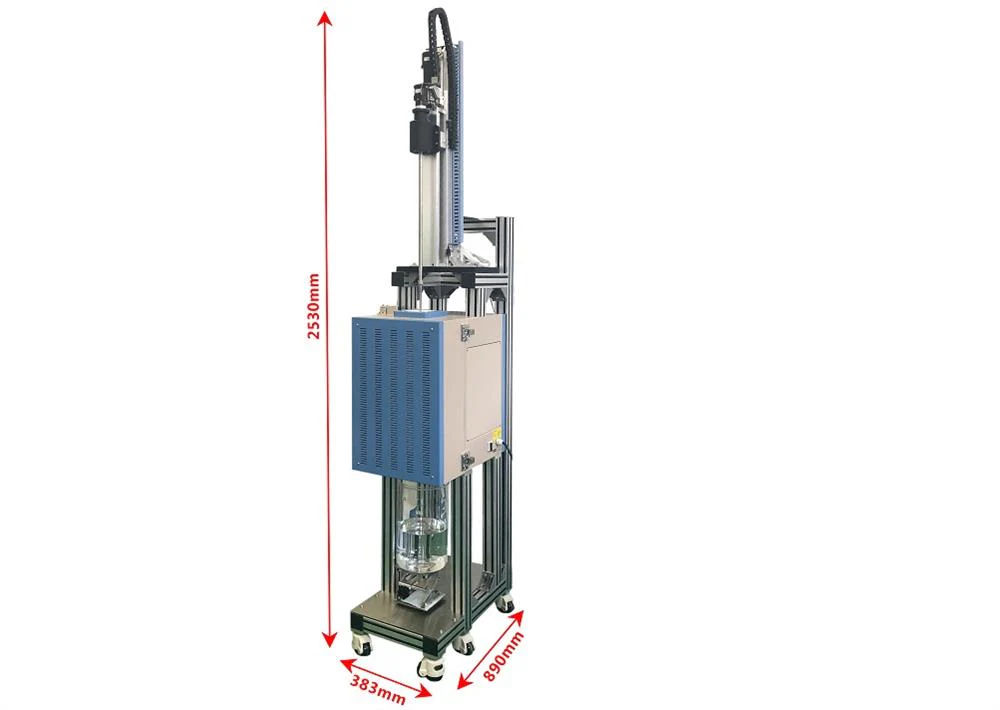
PTL-SC-6-LD Coating System has been designed to automate the entire process to avoid operator fatigue and errors associated with it. In the manual SILAR process, the operator has to perform hundreds of repetitive dipping into the solution and water. It is very difficult to control dip duration and number of dips in a manual process which can last hours. In the automated unit, the operator just needs to clamp the substrate into the holder and program the controller with required dip cycles and duration.
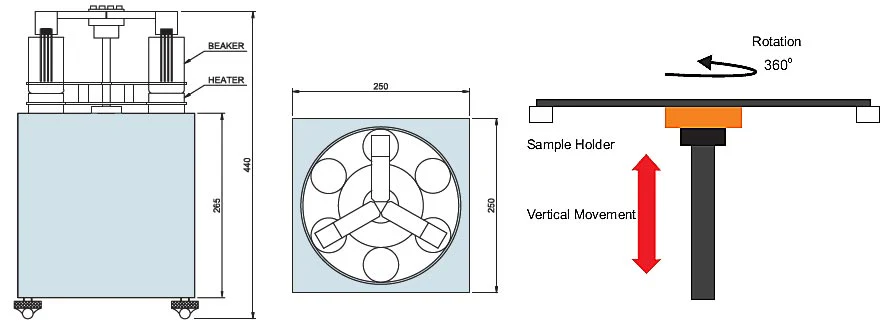
PTL-SC-6-LD has sample holders of 6 positions for programmable. The dipping speed, dip duration, retrieval speed, and dry duration can be set for each beaker station, and one hot plate on the bottom can heat all breakers up to 80°C. In this technique, the thin film is deposited on a glass substrate following a chemical technique called successive ion layer adsorption and reaction (SILAR). The technique involves multiple dipping of the substrate in a given solution and D.I. water, both temperatures can be varied from case to case.
| Actuator | Stepper motor |
| Drive Mechanism | Lead screw |
| Dip Duration | 0 - 99 seconds / minutes / hours |
| Speed Control | Drawing speed adjustable by the digital panel from 1 to 9999 μm/s or from 1 to 12 mm/s for each breaker station independently |
| Number of Cycles | 1 - 999 |
|
Power Input |
|
| Stroke Length Max. | 75 mm |
|
Sample Holder |
|
|
Control Unit |
|
| Compliance | All electric components are UL certified and the machine is ready to pass TUV, CSA or UL test at extra cost |
|
Application Notes |
  
|


Details & Craftsmanship
Every detail has been carefully considered to bring you the perfect product.
Description
PTL-SC-6-LD Coating System has been designed to automate the entire process to avoid operator fatigue and errors associated with it. In the manual SILAR process, the operator has to perform hundreds of repetitive dipping into the solution and water. It is very difficult to control dip duration and number of dips in a manual process which can last hours. In the automated unit, the operator just needs to clamp the substrate into the holder and program the controller with required dip cycles and duration.
PTL-SC-6-LD has sample holders of 6 positions for programmable. The dipping speed, dip duration, retrieval speed, and dry duration can be set for each beaker station, and one hot plate on the bottom can heat all breakers up to 80°C. In this technique, the thin film is deposited on a glass substrate following a chemical technique called successive ion layer adsorption and reaction (SILAR). The technique involves multiple dipping of the substrate in a given solution and D.I. water, both temperatures can be varied from case to case.
| Actuator | Stepper motor |
| Drive Mechanism | Lead screw |
| Dip Duration | 0 - 99 seconds / minutes / hours |
| Speed Control | Drawing speed adjustable by the digital panel from 1 to 9999 μm/s or from 1 to 12 mm/s for each breaker station independently |
| Number of Cycles | 1 - 999 |
|
Power Input |
|
| Stroke Length Max. | 75 mm |
|
Sample Holder |
|
|
Control Unit |
|
| Compliance | All electric components are UL certified and the machine is ready to pass TUV, CSA or UL test at extra cost |
|
Application Notes |
|